
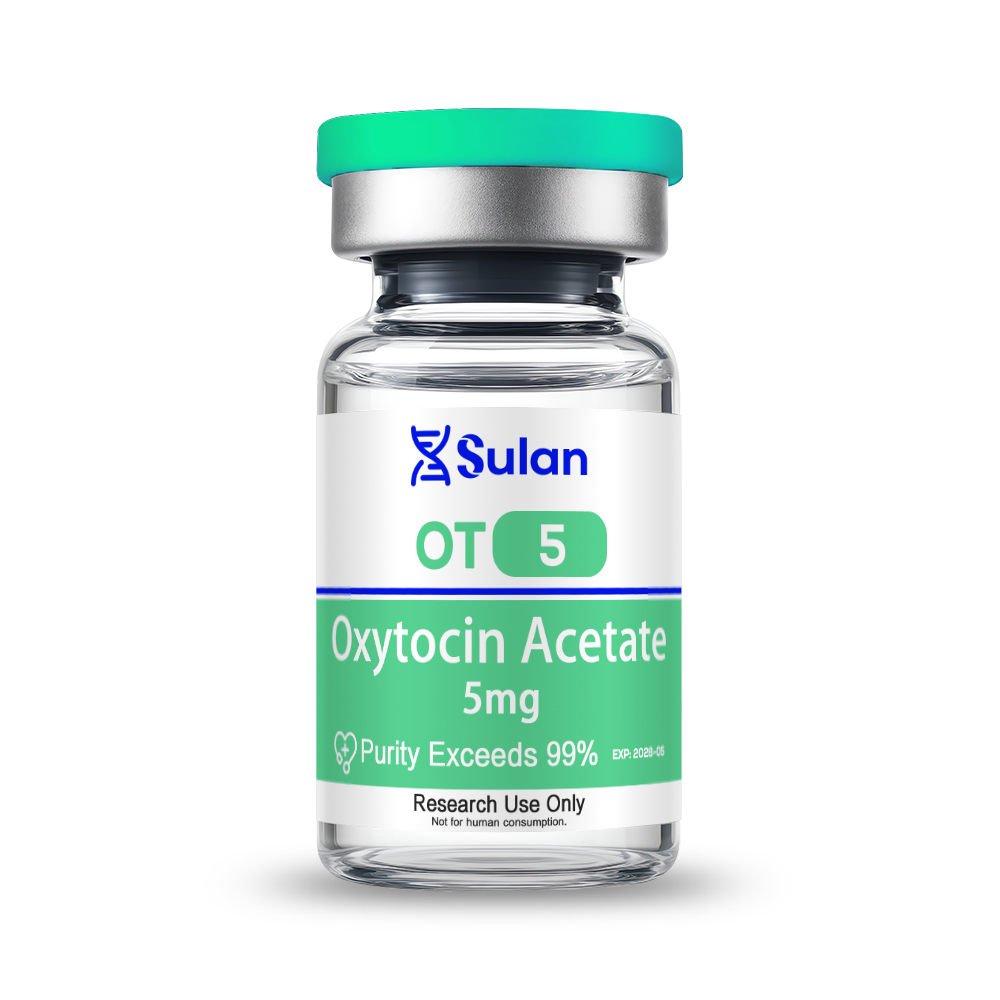
Oxytocin Acetate
This price is for one box, with ten pieces per box
- only 23 left in stock
- 36 people are viewing this right now
- 229 people has purchased this in 7 days
 Returns & Exchanges within 30 daysAny return for unsatisfied item(s) is available within 30 days
 Money Back GuaranteeA full refund within one week upon receiving your return
 3-Month WarrantyCovering any possible defect in materials and workmanship
 Safety AssuranceOur products are strictly tested and quality assured


Oxytocin Peptide
Oxytocin is a naturally occurring cyclic peptide hormone composed of nine amino acids. Scientists consider the peptide hormone to be secreted by the pituitary gland and to act as a neurotransmitter within the brain. (1) The synthetic form of the peptide, Recombinant Oxytocin , is a cyclic nonapeptide developed to be analogous to the naturally occurring peptide. (2)
The first isolation of the peptide was carried out in 1920, followed by its structure discovery in the 1950s. Several research studies were conducted to fully explore the peptide’s action and characteristics. Scientists consider it to be created by the hypothalamus, and Oxytocin is then secreted and stored in the posterior pituitary gland, potentially released in the event of a specific stimulation. (3) Unlike other hormones, naturally occurring Oxytocin has been posited to work via a positive feedback mechanism. This means that the initial secretion of the hormone peptide may lead to further release of the peptide in higher concentrations and with higher intensity. (3) Both synthetic and natural forms appear to work through the same potential mechanisms.
Considered to be especially pivotal in the process of gestation and labor, Oxytocin, once secreted into the system, may bind with the G-protein coupled receptors to potentially increase intracellular calcium levels. This calcium secretion may have various downstream impacts, such as inducing uterine contractions. Once the uterine contractions begin, they may stimulate further release of Oxytocin, leading to higher frequency and intensity of the contractions via a positive feedback mechanism. (3) The peptide appears to contribute to the contractions of myoepithelial cells found in the alveolar ducts of mammary glands. These contractions may stimulate milk ejection from alveolar ducts into the larger sinuses, thereby expelling milk. The positive feedback mechanism may also work here, with initial milk expulsion poten